Interior Door Stop Adjustment and Replacement Guide for Florida Homes
By James Evans
A rattling door is one of those minor annoyances that seems trivial until it starts waking you up at 3 a.m. In Tampa Bay homes, door stop problems are more common than elsewhere because Florida humidity causes wood frames, doors, and stops to swell and shift seasonally. A stop that was perfectly aligned in February may bang, rattle, or hold the door off the latch by October.
This guide covers everything homeowners in [Brandon](/handyman/brandon), [Valrico](/handyman/valrico), [Seffner](/handyman/seffner), [Riverview](/handyman/riverview), [Tampa](/handyman/tampa), and the rest of the [Tampa Bay area](/service-areas) need to know about door stops.
## What a Door Stop Actually Does
A door stop is the thin piece of molding tacked to the inside of the door frame that stops the door from swinging through. It also acts as the compression surface for the door seal and, in exterior doors, part of the weatherstripping system. When the stop is misaligned, the door either does not contact the latch side correctly (leaving a gap) or hits the stop before the latch engages (causing the door to spring back).
In Florida block homes, door frames are often set in metal buckjambs embedded in the masonry. The door stop molding is a separate piece nailed onto the jamb face. This means the stop can be pried off and relocated -- a repair that is nearly impossible in a steel frame but straightforward in a wood-frame or buckjamb installation.
## Tools You Will Need
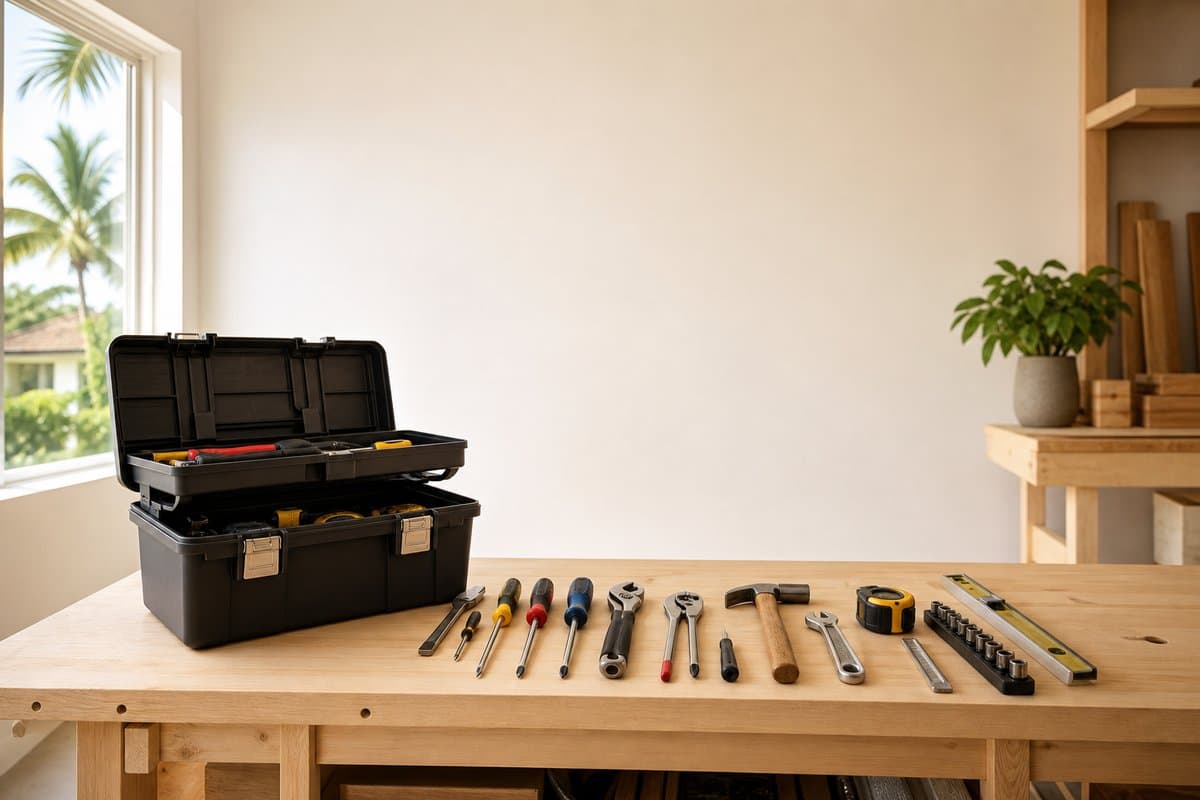
- Stiff putty knife or 5-in-1 tool
- Hammer
- Pry bar (small)
- Nail set and finish nails (2 inch)
- Wood filler or caulk
- Paint or primer
- Utility knife (for scoring paint)
## Diagnosing the Problem
Close the door slowly and watch where it makes contact. A correctly installed door stop contacts the door face at the same moment the latch engages. Problems are usually one of three types:
**Stop too far from the door**: The latch engages but the door rattles because there is space between the door face and the stop. In Florida humidity cycles, this happens when the door shrinks in dry months and the gap opens up.
**Stop too close to the door**: The door hits the stop before the latch engages, causing the door to bounce back. This happens when the door swells in humid months and the stop needs to move outward.
**Stop at an angle**: One point of the stop contacts the door, but the rest does not. This happens when the frame has twisted slightly, which is common in Florida's slab-on-grade homes as the structure settles.
## Moving a Door Stop
Score the paint line between the stop and the jamb with a utility knife to prevent tearing the paint and drywall when you pry. Insert a stiff putty knife in the gap, then work a small pry bar behind the stop and lever it off gently. Work in 6-inch sections from one end to the other.
Pull all the nails from the stop. Use pliers to pull them through the back face rather than hammering them through the front, which would leave dents.
Reposition the stop against the closed door. Hold a business card between the door face and the stop as a spacer -- this creates just enough clearance so the door does not bind. Tack the stop in place with two finish nails, then check the operation. If it feels right, nail it permanently every 8 to 10 inches. Set the nails slightly below the surface with a nail set.
Fill the old nail holes and any gap where the stop used to sit with wood filler or flexible caulk. Sand smooth, prime, and paint to match.
## When the Door Stop Is Painted Shut
In older Tampa Bay homes that have been painted many times, the door stop can be literally glued to the door by layers of paint. If the door sticks and does not latch, try this before prying: score the paint line deeply with a utility knife on both the jamb side and the door-face side of the stop. Then work the putty knife in slowly. This usually breaks the paint seal without damaging the wood.
If the stop is beyond salvage -- split, dented, or missing sections -- measure the profile at a hardware store and buy matching replacement molding. Door stops are standard profiles (usually 7/16 inch by 1-3/8 inch) stocked at any home center.
## Adjusting a Door Stop That Has Separated from Paint
Sometimes the stop has pulled away from the jamb slightly but is still attached. You can push it back and renail it without full removal. Press the stop against the jamb firmly and toenail it back with finish nails through the face, working from the hinge side of the frame toward the latch side. This pulls the stop tight.
## Door Stop Replacement on Metal Buckjamb Frames
Florida block homes built from the 1960s through the 1980s often have metal buckjamb frames. The door stop in these frames is typically integral to the metal profile -- it cannot be moved. If the door does not latch correctly because the frame has shifted, the solution is a strike plate adjustment rather than a stop relocation. File or chisel the strike plate mortise until the latch engages cleanly.
In severe cases where the metal frame has bent outward (common after hurricane window replacement), the frame can be straightened with a hydraulic spreader before the door stop issues are corrected.
## Seasonal Adjustments in Florida
Because Florida humidity swings between approximately 50 percent in winter and 80 to 90 percent in summer, interior doors routinely change dimension. Rather than repeatedly adjusting the stop, the better long-term fix is to seal all six faces of interior doors (including the top and bottom) with primer and paint or polyurethane. This slows moisture absorption and reduces the seasonal movement that drives the stop problems.
Hollow-core doors -- the standard in most Florida homes -- absorb less moisture than solid-core but still move. Older hollow-core doors that have swelled significantly may benefit from light planing on the latch edge followed by sealing.
## When to Call Best Bay Services
Most door stop issues are manageable DIY repairs. But if your doors are difficult to close because of frame movement, if multiple doors in your home are misaligned, or if you have metal buckjamb frames that need adjustment, call [Best Bay Services](/contact) for an assessment. James Evans has repaired door frames throughout [Tampa Bay](/service-areas) including [Plant City](/handyman/plant-city), [Gibsonton](/handyman/gibsonton), [Sun City Center](/handyman/sun-city-center), and [Ruskin](/handyman/ruskin). [Get a free estimate](/quote) and we will sort out the doors in a single visit.
Need Professional Help?
Let James handle it — call for a free estimate today.
James has over 10 years of experience in home repair and maintenance throughout Tampa Bay. He founded Best Bay Services to bring honest, quality handyman work to local homeowners, landlords, and property managers.