
Quick Answer
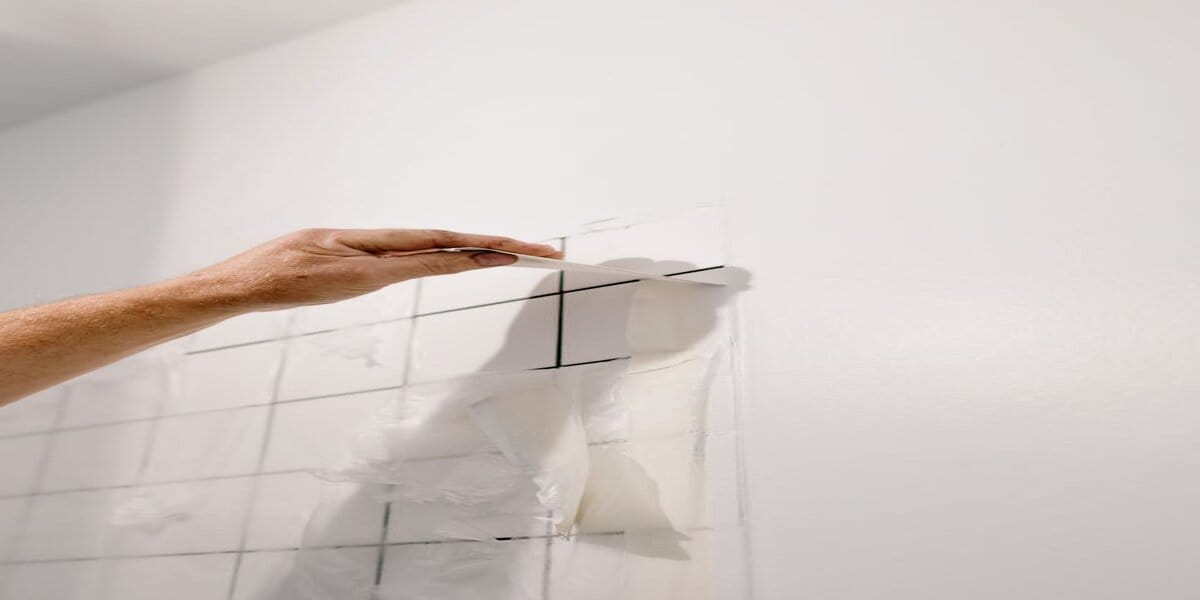
Most wall repairs are simpler than you think. Small holes need spackle and a putty knife. Medium holes (2-6 inches) use a patch kit or California patch method. Large holes require cutting to studs and installing new drywall. The key is patience – multiple thin coats, proper drying time, and careful sanding. Best Bay Services handles all wall repairs across Tampa Bay.
Wall Repair Basics: What You Need to Know Before Starting
Whether it is a doorknob hole, a nail pop, a crack along a seam, or damage from hanging shelves, wall repair is one of the most common home maintenance tasks. And it is one of the most satisfying because the results are immediate and visible. A damaged wall that has been bugging you for months can look perfect again in an afternoon.
The good news is that most wall repairs are straightforward. You do not need specialized skills or expensive tools. What you do need is the right materials, the right technique for the size of damage, and patience. Rushing is the number one cause of visible patches that never quite look right.
Essential Materials for Wall Repair
| Material | Cost | Used For |
|---|---|---|
| Lightweight spackle | $5-$8 | Small holes, nail holes, dents |
| Joint compound (mud) | $8-$15 | Larger repairs, seam work, skim coating |
| Self-adhesive mesh patches | $5-$10 | Holes up to 4 inches |
| Mesh drywall tape | $5-$8 | Cracks, seam repairs |
| Putty knives (4-inch and 6-inch) | $5-$12 | Applying and smoothing compound |
| Sanding sponge (120 grit) | $3-$5 | Smoothing dried compound |
| Primer (stain-blocking) | $10-$18 | Sealing repair before painting |
| Matching paint | $15-$40 | Final coat over repair |
Repair Type 1: Nail Holes and Small Dents
This is the simplest repair and the most common. Picture hanging holes, nail pops, small dents from furniture bumps, and anchor holes from removed shelving all fall in this category.
Step-by-Step Instructions
- Clean the area – Remove any loose drywall, dust, or debris. If there is a wall anchor, pull it out or push it behind the wall surface. If there is a protruding nail, hammer it back flush or pull it out.
- Apply spackle – Using a putty knife, press lightweight spackle into the hole. Fill it slightly proud of the surface (overfill just a tiny bit) since spackle shrinks as it dries.
- Smooth the surface – Drag the putty knife across the filled area at an angle to smooth it level with the surrounding wall. One smooth pass is better than multiple swipes.
- Let it dry – Lightweight spackle dries in 30-60 minutes for small holes. In Florida’s humidity, give it a full hour to be safe.
- Sand lightly – Use a fine-grit sanding sponge (120 or 150 grit) to blend the edges. The goal is a perfectly smooth transition between the patch and the surrounding wall.
- Prime – Apply a thin coat of primer over the patch. Unprimed spackle absorbs paint differently than the surrounding wall, creating a visible spot even with matching paint.
- Paint – Apply matching paint. For the most invisible result, paint from the patched area outward, blending into the existing paint while it is still wet (called feathering).
Pro tip: For multiple small holes in the same wall, fix them all at once. You can spackle, let everything dry, sand all patches, then prime and paint the entire wall for the most consistent finish.
Repair Type 2: Small Holes (Under 2 Inches)
Holes from removed wall anchors, toggle bolts, or minor impacts that break through the drywall surface but do not go all the way through (or are less than 2 inches across) can be fixed with a self-adhesive mesh patch.
Step-by-Step Instructions
- Clean the area – Remove any loose material. If the paper facing is torn, carefully trim the loose paper with a utility knife so nothing is hanging or peeling.
- Apply the mesh patch – Peel the backing off a self-adhesive mesh patch and center it over the hole. Press firmly to adhere it to the wall surface. The patch should extend at least 1 inch beyond the hole in all directions.
- Apply first coat of compound – Using a 6-inch putty knife, spread a thin layer of joint compound over the entire patch, extending 2-3 inches beyond the edges. You should barely be able to see the mesh through the compound.
- Let it dry completely – In Florida, allow 24 hours for joint compound to dry fully. It starts white and turns lighter as it dries. Do not proceed until it is uniformly light colored.
- Sand lightly – Sand the first coat to remove any ridges or bumps. Do not sand aggressively; just knock down the high spots.
- Apply second coat – Spread a slightly wider, thinner coat of compound. Extend 1-2 inches beyond the first coat to feather the edges. The goal is a gradual transition from the patch to the wall surface.
- Let dry and sand again – Same as step 4 and 5. If the patch is smooth and blends well, you are ready to prime. If you can still see the texture of the mesh, apply a third thin coat.
- Prime and paint – Prime the entire patched area, let dry, then paint to match.
Repair Type 3: Medium Holes (2-6 Inches) – The California Patch
For doorknob holes, larger impacts, and holes from removed electrical boxes, the California patch (also called a hot patch or butterfly patch) is the most reliable method. It creates a strong, smooth repair without needing to attach a backing board.
Step-by-Step Instructions
- Cut the hole into a clean shape – Use a drywall saw or utility knife to trim the damaged area into a clean rectangle or square. Straight edges make the patch easier to blend.
- Cut a patch piece – Cut a piece of drywall 2-3 inches larger than the hole in each direction. For example, for a 4-inch hole, cut a piece about 8×8 inches.
- Score the back of the patch – On the back of your patch piece, score (cut through) the drywall and gypsum to the exact size of the hole, but do NOT cut through the front paper facing. Carefully snap away the outer gypsum, leaving a clean drywall plug with a paper border (flange) extending 1-2 inches on all sides.
- Test fit the patch – Hold the patch over the hole. The drywall plug should fit snugly inside the hole, with the paper flange sitting flat against the surrounding wall. Trim as needed for a good fit.
- Apply compound to the wall – Spread a thin layer of joint compound on the wall surface around the hole where the paper flange will sit.
- Set the patch – Press the patch into place. The plug fills the hole and the paper flange embeds into the compound on the surrounding wall. Use a putty knife to smooth the flange flat against the wall and squeeze out excess compound.
- Apply first coat over the patch – Once the patch is set, apply a thin coat of joint compound over the entire patch including the flanges. Extend 2-3 inches beyond the edges.
- Let dry, sand, and apply second coat – Allow 24 hours to dry. Sand smooth. Apply a second, wider coat to feather the edges. Repeat until smooth.
- Prime and paint
The California patch is the method most professional handymen use for medium holes because it is fast, requires no backing board, and creates a very strong repair. For a detailed guide to professional finishing techniques, see our article on getting a smooth drywall finish.
Repair Type 4: Large Holes (Over 6 Inches)
Large holes from impacts, water damage repairs, plumbing access, or electrical work require cutting back to the studs and installing a new piece of drywall. This is where repairs start to get more involved, though it is still a very manageable DIY or handyman project.
Step-by-Step Instructions
- Locate the studs – Use a stud finder to mark the studs on either side of the damaged area. You will cut back to the center of these studs so the new drywall has something to screw into.
- Mark and cut – Draw a rectangle that extends from the center of one stud to the center of the next, encompassing all damaged area. Use a drywall saw to cut along the lines. Be careful of any wiring or plumbing inside the wall.
- Check inside the wall – Before installing the new piece, look inside the wall cavity. Check for moisture, mold, or any damage to the framing. In Florida, this is especially important because hidden moisture damage is common. Fix any issues before closing up the wall.
- Cut the new drywall – Measure the opening and cut a piece of drywall to fit. It should be the same thickness as the existing drywall (usually 1/2 inch for walls, 5/8 inch for ceilings). Leave a 1/8-inch gap around the edges for compound.
- Install the new piece – Screw the new drywall into the studs using drywall screws. Sink the screw heads just slightly below the surface without breaking through the paper.
- Tape the seams – Apply mesh or paper drywall tape over all seams between the new and old drywall.
- Apply compound – Cover the tape with joint compound. Use a 6-inch knife for the first coat, then an 8-10 inch knife for subsequent coats to feather the edges wider.
- Three coats minimum – Apply at least three coats, drying and sanding between each. Each coat should extend slightly wider than the last to create a gradual transition.
- Final sand – Do a final light sanding with 150-grit to ensure everything is smooth. Run your hand over the surface; you should not feel where the patch ends and the old wall begins.
- Prime and paint the entire wall – For large repairs, prime and paint the entire wall from corner to corner for the most consistent finish.
Repair Type 5: Cracks Along Seams
Cracks along drywall seams are extremely common in Florida homes due to humidity cycling and settling. These appear as straight-line cracks that follow the horizontal or vertical joint between two sheets of drywall.
Step-by-Step Instructions
- Widen the crack slightly – Use a utility knife to cut a shallow V-groove along the crack. This gives the compound more surface area to bond to.
- Remove loose material – Peel away any loose tape or crumbling compound along the crack.
- Apply mesh tape – Center a strip of self-adhesive mesh tape over the entire length of the crack.
- Apply compound – Cover the tape with a thin coat of joint compound, extending 3-4 inches on each side.
- Dry, sand, second coat – Allow to dry completely (24 hours), sand smooth, apply a wider second coat.
- Third coat if needed – For wide seam cracks, a third coat feathered even wider ensures an invisible repair.
- Prime and paint
For recurring cracks: If the same crack keeps coming back, the wall is still moving. Instead of rigid joint compound, use paintable caulk along the crack. Caulk flexes with the movement and will not re-crack. This works especially well for ceiling-to-wall joint cracks and cracks above door frames.
Repair Type 6: Nail Pops
Nail pops are one of the most common drywall problems in Florida. They appear as small bumps or crescent-shaped cracks where a nail or screw is pushing through the surface.
Step-by-Step Instructions
- Drive a new screw – Place a drywall screw 1-2 inches above or below the popped nail. Drive it until the head is just below the surface without breaking the paper.
- Deal with the old nail – If you can, pull the popped nail out with pliers. If not, hammer it back below the surface.
- Apply compound – Cover both the new screw and the old nail location with joint compound.
- Dry and sand – Let dry for 24 hours, sand smooth.
- Second coat if needed – Apply a thin second coat if the repair is still visible.
- Prime and paint
Florida-Specific Tips for Wall Repair
Wall repair in Florida has some unique considerations due to our climate:
- Allow extra drying time – Joint compound and spackle take longer to dry in Florida’s humidity. What might dry in 4 hours in Arizona takes 24 hours here. Do not rush this step or you will trap moisture under the paint.
- Run the AC while repairs dry – Lower humidity speeds drying and improves the bond. Point a fan at the repair for even faster drying.
- Use mesh tape, not paper tape – Mesh tape holds up better in Florida’s moisture-prone environment. Paper tape can absorb humidity and separate over time.
- Always prime before painting – In Florida, unprimed repairs absorb moisture differently than the surrounding wall, leading to visible patches and potential paint failure.
- Check for mold before closing up – Any time you open a wall in Florida, inspect the cavity for mold, moisture, and termite damage before installing the patch.
- Use setting-type compound for deep repairs – Hot mud (setting compound like Easy Sand) dries by chemical reaction rather than evaporation, so it performs much better in high humidity for filling deep holes or building up thick areas.
- Match texture – Many Florida homes have orange peel or knockdown texture on walls. After patching, you will need to match this texture before painting. Texture-in-a-can products work for small areas. For larger areas, a hopper and compressor give better results.
Matching Paint After Repairs
Getting the paint to match after a repair is often the trickiest part. Even if you have the original paint can, wall paint fades and changes color over time from UV exposure and cleaning. Here are strategies for the best match:
- Use the original paint if you have it – Even if it is not a perfect match, it is usually close enough for small patches that the difference fades within a few days.
- Get a color match at the paint store – Cut a small chip of paint from an inconspicuous spot (inside a closet, behind a door) and bring it to the paint store for matching. Digital color matching is accurate but not perfect.
- Paint corner to corner – For larger repairs or noticeable color differences, paint the entire wall from one corner to the next. The eye naturally sees corners as boundaries, so color differences between walls are less noticeable than patches on the same wall.
- Blend while wet – When touching up small areas, feather the new paint into the old paint while it is still wet. This creates a gradual transition that is less visible than a hard edge.
- Match the sheen – Flat paint is more forgiving of touch-ups than satin or semi-gloss. If your walls are semi-gloss, even a perfect color match can look different if the sheen is slightly off. Make sure you match both color and sheen.
When to DIY vs. When to Call a Handyman
| Repair | DIY? | Notes |
|---|---|---|
| Nail holes and small dents | ✓ Yes | Easiest repair, great for beginners |
| Small holes (under 2 inches) | ✓ Yes | Patch kits make this straightforward |
| Nail pops | ✓ Yes | Simple once you know the technique |
| Seam cracks | ✓ Yes | Tape and compound, patience needed |
| Medium holes (California patch) | ✓/✗ Maybe | Requires more skill; hire handyman if unsure |
| Large holes (stud-to-stud) | ✗ Handyman | Multiple skills, texture matching |
| Water-damaged drywall | ✗ Handyman | Must check for mold, fix source first |
| Ceiling repairs | ✗ Handyman | Overhead work, texture matching |
| Textured wall matching | ✗ Handyman | Requires experience and equipment |
The advantage of calling a handyman for wall repairs is speed and invisible results. What might take a DIYer an entire weekend (with multiple coats and drying time), a professional can often complete in a single visit with results that are genuinely undetectable. For more on this decision, see our guide on when your home needs a handyman.
Frequently Asked Questions
How long should I wait between coats of joint compound?
In Florida, allow a full 24 hours between coats. Joint compound dries by evaporation, and our high humidity slows this process significantly. The compound should be uniformly light in color (white or near-white) with no dark spots before you sand or add the next coat. If you want to speed things up, run your AC and point a fan at the repair area.
What is the difference between spackle and joint compound?
Spackle is lighter, dries faster, and shrinks more. It is best for small repairs like nail holes and minor dents. Joint compound (mud) is heavier, takes longer to dry, shrinks less, and provides a stronger bond. It is better for larger repairs, seam work, and any repair that requires multiple coats or tape. For most Florida wall repairs larger than a nail hole, joint compound is the better choice.
Can I use caulk instead of joint compound for wall cracks?
Yes, for hairline cracks that keep recurring, paintable acrylic caulk is actually a better choice than joint compound. Caulk remains flexible and moves with the wall, while joint compound is rigid and will re-crack if the wall continues to move. Apply the caulk, smooth it with a damp finger, let it dry, then paint over it. This is especially effective for ceiling-to-wall joint cracks in Florida homes.
Do I always need to prime before painting a wall repair?
Yes, always prime wall repairs in Florida. Unprimed spackle and joint compound are porous and absorb paint differently than the surrounding wall. Without primer, the patch will show as a dull spot (called flashing) even with matching paint. A quick coat of primer seals the repair and ensures uniform paint absorption.
How do I match the texture on my repaired wall?
Most Florida homes have either orange peel or knockdown texture. For small patches, texture-in-a-can products (available at any hardware store) work well. Practice on a piece of cardboard first to get the right spray distance and pattern. For larger areas, you may need a hopper gun and compressor. If you are not confident matching texture, this is one area where a handyman can really make a difference in the final result.
How much does professional wall repair cost in Tampa Bay?
Typical professional wall repair costs in the Tampa Bay area: nail holes and small dents ($50-$75 per area), small hole patches ($75-$125), medium holes ($100-$200), large section replacement ($150-$400), crack repair ($75-$150 per crack), and full room patching and painting ($300-$800). Most handymen offer better per-repair pricing when you bundle multiple repairs in one visit.
More Common Questions
How long does a simple wall patch take to dry in Florida humidity?
In Florida, expect each coat of spackle or joint compound to take a full 24 hours to dry, compared to 4-8 hours in drier states. Running your AC and pointing a fan at the patch can cut that time significantly. Do not sand or add another coat until the compound is uniformly white with no dark or damp spots.
What is the best spackle or compound for small wall repairs?
For nail holes and small dents, a lightweight spackle like DAP DryDex works great and dries fast. For anything larger than a quarter or deeper than a quarter inch, use all-purpose joint compound for a stronger, more durable repair. In high-humidity areas like bathrooms, consider a setting-type compound that cures by chemical reaction instead of evaporation.
Can I paint over a wall patch the same day?
In Florida, it is best not to. Even if the spackle feels dry on the surface, moisture can be trapped underneath in our humid climate. Wait at least 24 hours, then apply a coat of primer before painting. Skipping the primer will result in a visible dull spot called flashing, even if you use the exact same paint color.
How do I match the existing wall texture after a repair?
Most Tampa Bay homes have orange peel or knockdown texture. For small patches, grab a can of spray texture from your local hardware store and practice on cardboard first to dial in the distance and pressure. For larger areas, you may need a hopper gun. Apply texture after priming the patch but before the final paint coat for the best blend.
When should I call a professional instead of doing wall repair myself?
Call a professional if the damaged area is larger than about 6 inches, if you see signs of mold or water damage behind the wall, or if the damage is near plumbing or electrical. Also consider calling a pro if you need to match a tricky wall texture or if the repair is in a high-visibility area like a living room or entryway where imperfections will be obvious.
Wall Damage? We Make It Disappear.
From small nail holes to large drywall sections, Best Bay Services handles wall repairs of all sizes across Tampa Bay. We patch, texture, prime, and paint so the repair is completely invisible. One visit, done right.


