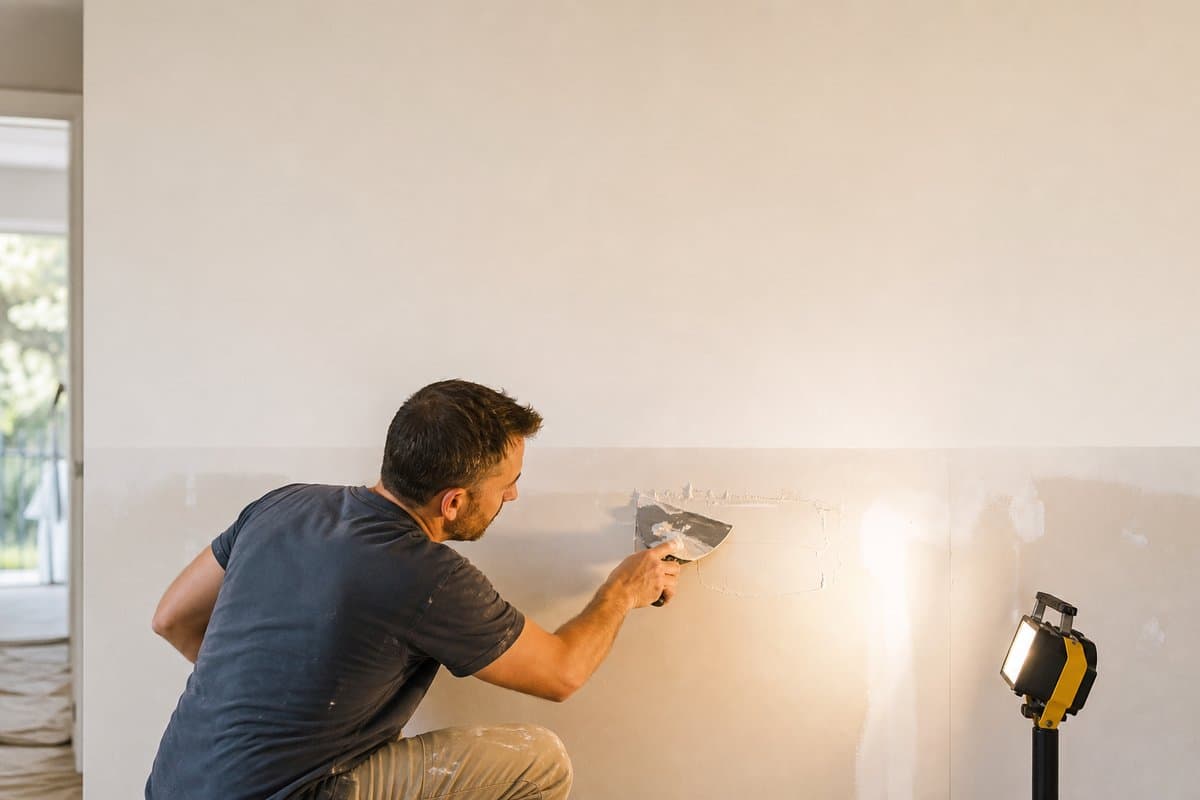
The Homeowner's Guide to Drywall Repair: From Small Holes to Large Patches
Why Drywall Repair Is One of the Most Common Handyman Calls in Tampa Bay
Drywall is the skin of your home's interior, and it takes damage from dozens of sources over time: doorknobs punching through during a move, water stains from a plumbing drip, nail pops as the framing dries out, settling cracks in older Florida homes, and the inevitable holes that come from wall-mounted TVs moved from one location to another. James Evans at Best Bay Services handles drywall repair throughout Tampa Bay — and the approach changes significantly depending on the type of damage. Here is a practical guide.
Hairline Cracks
Hairline cracks are the most common drywall issue in Tampa Bay homes, especially in older properties and new construction that is still settling. Most hairline cracks appear at wall corners, above door and window frames, or along seams where drywall panels meet.
In Florida's block construction homes, hairline cracks can also appear across the face of the drywall as the block structure moves slightly through seasonal temperature and humidity cycles. These are almost always cosmetic and not structural.
Repair involves opening the crack slightly, applying joint compound in multiple thin coats, feathering it out to blend with the surrounding surface, sanding smooth, and repainting. Matching the existing texture (flat, orange peel, knockdown) is the skill that separates a repair that blends in from one that is obvious at any angle. If you have a textured finish, the repair is not complete until the texture matches.
Nail Pops
Nail pops appear as small bumps or circular protrusions in the drywall surface. They happen when drywall screws or nails back out of the framing — typically as the lumber dries and moves slightly after construction. They are especially common in new Florida homes during the first one to three years after construction.
The fix is more involved than it looks. Simply hammering the nail back in or adding spackle over the bump is a temporary fix that reappears within months. The correct repair involves driving a new drywall screw adjacent to the popped fastener to hold the panel firmly to the stud, countersinking the original fastener, and then filling, feathering, and repainting the area. Done correctly, a nail pop repair holds permanently.
Small Holes (Doorknob Holes, Anchors, Outlets)
Holes up to about two inches in diameter can be repaired with a self-adhesive patch kit available at hardware stores, but professional results require a bit more care. A metal or fiberglass mesh patch is applied over the hole and covered with multiple thin coats of joint compound, sanded between coats. The final coat is matched to the wall texture before painting.
For holes left by toggle bolts and wall anchors from a TV mount or shelving unit, the same process applies. The repair is usually quick but texture matching is critical — a flat patch on a textured wall reads as a repair from across the room.
Medium Holes (6 Inches or Smaller)
Holes in the three to six inch range require a backing piece inside the wall to give the joint compound something to grip. A common technique uses a piece of new drywall slightly larger than the hole cut to fit precisely, supported by adhesive-backed backing strips that grip the face of the existing drywall on both sides of the hole. Joint compound is then applied in multiple coats, sanded, textured, and painted.
This category includes holes from door handles swinging hard into walls, damage from removed shelving brackets, and holes cut for electrical boxes that were later moved or eliminated.
Large Holes and Section Replacements
For damage larger than six inches — including large impact holes, sections damaged by water, or areas where mold is present — the best repair is typically a cut-and-replace approach. A section of drywall is cut back to the nearest studs on each side of the damage, a new piece of drywall is installed and fastened to the studs, and the seams are taped, mudded, and finished. This produces the strongest and most seamless repair for large areas.
When drywall has been wet, the damaged section must be fully removed and the area allowed to dry completely before new drywall is installed. Covering wet drywall traps moisture and creates mold conditions behind the wall. In Tampa Bay, water damage to drywall is common from roof leaks, plumbing drips, and HVAC condensate line clogs — all of which we see regularly.
Water-Stained Drywall
Water stains that appear as yellow or brown rings on ceilings or walls indicate past or ongoing moisture intrusion. Repainting over a water stain without treating it first allows the stain to bleed through even multiple coats of paint. The correct approach is to address the source of the moisture first (fix the leak or drain line), allow the area to dry completely, apply a stain-blocking primer, and then repaint.
If the drywall has softened or crumbled from the moisture exposure, it needs to be replaced rather than painted over. Soft drywall has lost its structural integrity and will not hold paint or texture correctly.
Drywall in Block Construction Homes
Many Tampa Bay homes from the 1960s through the 1990s are concrete block construction with drywall applied over furring strips or directly to the block. Repairs in these homes require attention to a few extra considerations. Fasteners must be driven into the furring strips rather than the block itself. In some older homes, the furring strips have shifted or loosened, which must be addressed before the drywall surface can be properly finished. Block construction also means the drywall is less forgiving of moisture — any moisture intrusion tends to affect a larger area than in frame construction because the block itself absorbs and holds water.
Get a Free Drywall Repair Estimate in Tampa Bay
Best Bay Services handles all types of drywall repair throughout Tampa Bay. Whether you have a single nail pop, a water-stained ceiling, or a large section that needs replacement, James Evans can assess the damage and give you a straightforward estimate. Call (813) 416-8676 or use the contact form on our website.
Key Takeaways
- Hairline cracks, nail pops, and small anchor holes are the most common drywall repairs in Tampa Bay homes.
- Texture matching is what makes a drywall repair invisible versus obvious — do not skip it.
- Water-stained drywall must be dried out completely and primed with a stain blocker before repainting.
- Block construction homes require extra attention to furring strip integrity and moisture management during drywall repairs.
Need Professional Help?
Let James handle it — call for a free estimate today.
Common Questions
Related Guides

James Evans
Owner & Lead Technician
James has over 10 years of experience in home repair and maintenance throughout Tampa Bay. He founded Best Bay Services to bring honest, quality handyman work to local homeowners, landlords, and property managers.