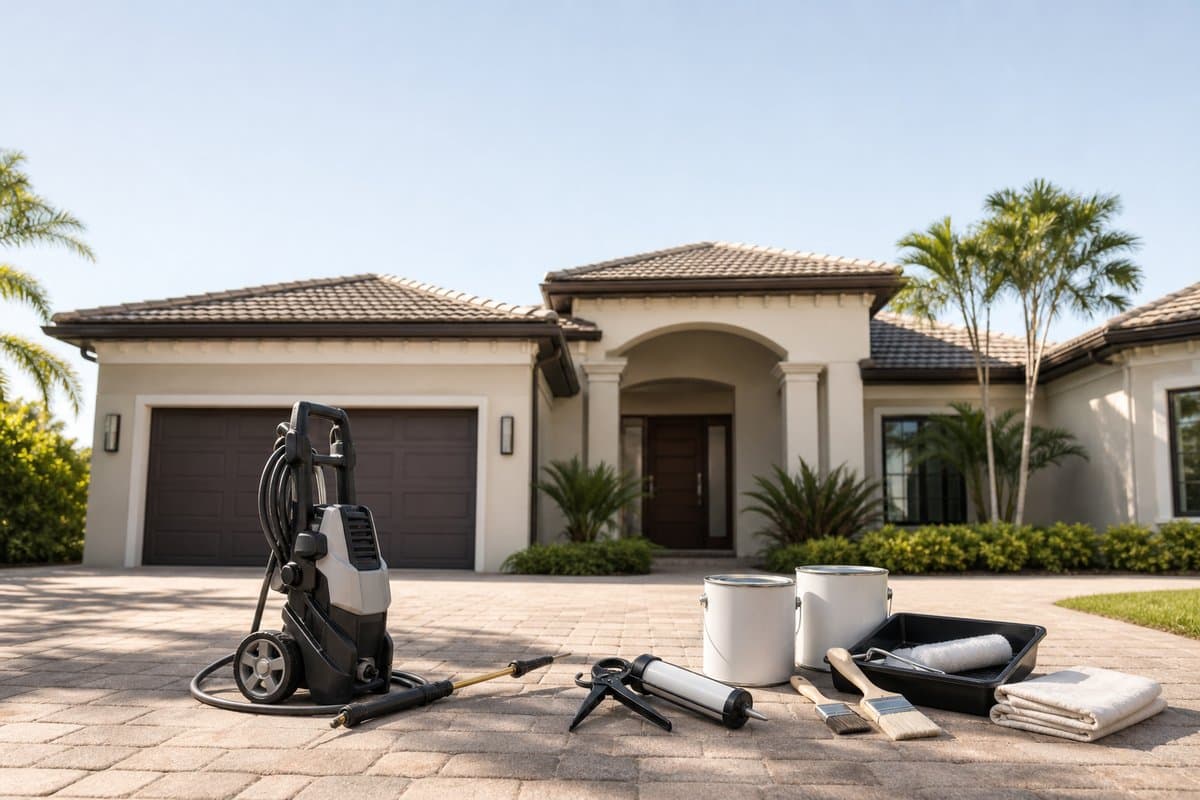
The Florida Exterior Maintenance Checklist for Tampa Bay Homeowners
Why Does Florida Exterior Maintenance Work Differently?
The same maintenance tasks that need to happen every two or three years in a northern state often need to happen every year in Florida. Heat and UV exposure degrade paint and caulk faster. Humidity keeps exterior surfaces perpetually damp and promotes mold, mildew, and wood rot. Hurricane season adds wind and water loads that stress every fastener, sealant, and surface on the exterior of your home.
James Evans and the Best Bay Services team handle exterior maintenance throughout Tampa Bay. Here is the annual checklist we recommend for Florida homeowners.
Roof and Gutters
- Inspect the roof from the ground after every major storm. Look for missing or lifted shingles, debris accumulation, and visible soft spots. Binoculars work well for this if you do not want to get on the roof yourself.
- Clean gutters before and after wet season. June through November is Florida's wet season and the period of heaviest rainfall. Clogged gutters during this period cause fascia rot, foundation erosion, and landscaping damage. For heavily treed properties, add a third cleaning in late winter.
- Check downspout extensions. Downspouts should discharge water at least six feet from the foundation. Extensions that are missing, damaged, or pointed toward the house create foundation saturation issues.
Exterior Paint and Caulking
- Inspect all exterior caulking annually. Florida's UV exposure and moisture cycles degrade caulk faster than in most climates. Check around all windows, doors, utility penetrations, and where siding meets trim. Cracked or missing caulk lets moisture behind walls and creates conditions for mold and rot.
- Re-caulk where needed. Fresh caulk is inexpensive and prevents expensive repairs later. Focus first on the south and west exposures, which take the most direct sun.
- Repaint exterior surfaces on a five to seven year cycle. Florida sun breaks down exterior paint faster than in drier climates. Peeling paint is not just an aesthetic problem: it exposes the underlying material to direct moisture and accelerates rot in wood and spalling in stucco.
- Check stucco for cracks. Hairline cracks are common in Florida stucco and should be filled before water infiltrates. Wider cracks or cracks with rust staining indicate underlying metal lath corrosion that needs professional assessment.
Doors and Windows
- Test all exterior door seals. Weatherstripping around exterior doors deteriorates in Florida heat. Hold a piece of paper against the seal and close the door. If you can pull it out easily, the seal needs replacing.
- Lubricate door and window hardware. Hinges, rollers, and tracks on sliding doors and windows corrode quickly in Tampa Bay humidity. Annual lubrication with a dry lubricant or silicone spray prevents binding and premature wear.
- Check window frames for moisture damage. Water infiltration around windows that have failed caulk or cracked frames leads to interior wall damage, mold, and eventually rot in the surrounding framing. Addressing window maintenance now prevents much larger repairs later.
Fences and Outdoor Structures
- Walk the fence line after every major storm. Look for leaning posts, cracked boards, sagging gates, and sections where vegetation is pressing against the fence and holding moisture against the wood.
- Treat or paint wood fences every three to five years. An unpainted wood fence in Florida will begin to show rot within five to seven years. Paint or solid stain seals out moisture and UV and dramatically extends fence life.
- Check deck or porch fasteners. Screws and nails in wood decks, porches, and outdoor structures rust in Florida's humidity. Raised fasteners or rust staining on the deck surface indicate fasteners that need replacement before they weaken the structure.
Pressure Washing
- Pressure wash the home exterior annually. Florida's humidity creates a continuous cycle of algae, mold, and mildew on driveways, sidewalks, home exteriors, and pool decks. Annual pressure washing removes buildup before it stains permanently and makes paint and caulk inspections easier to do on a clean surface.
- Clean the roof if algae is visible. Black streaking on asphalt shingles is caused by algae that breaks down the organic material in the shingles over time. Soft washing removes roof algae without the risk of high-pressure damage to the shingles.
Drainage and Foundation
- Check that the grade drains away from the foundation. Water should move away from the home in all directions. Soil that has settled toward the foundation, or planters that hold moisture against the wall, create foundation saturation issues that show up as interior moisture problems.
- Look for pooling water after rain. Pooling within six feet of the foundation after a normal rain event suggests grading or drainage issues that need correction before the wet season intensifies them.
Schedule Your Annual Exterior Maintenance
Best Bay Services handles exterior maintenance throughout Tampa Bay. A single visit can cover pressure washing, caulk inspection and re-caulking, gutter cleaning, fence inspection, and minor repairs so you walk away with a complete picture of your home's exterior condition. Call James Evans at (813) 416-8676 to schedule.
Key Takeaways
- Florida's climate requires annual exterior caulk inspection and more frequent repainting than in drier climates.
- Gutter cleaning before wet season is the most important single maintenance task for Tampa Bay homeowners.
- Walk your fence and inspect exterior door seals and window frames after every major storm.
- Annual pressure washing removes algae and mildew and makes all other inspections easier to do.
Need Professional Help?
Let James handle it — call for a free estimate today.
Common Questions

James Evans
Owner & Lead Technician
James has over 10 years of experience in home repair and maintenance throughout Tampa Bay. He founded Best Bay Services to bring honest, quality handyman work to local homeowners, landlords, and property managers.